


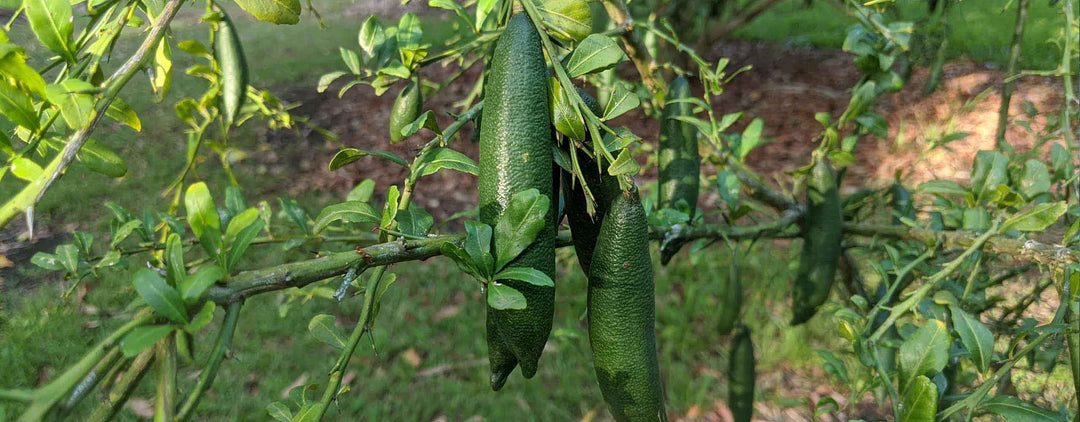
Finger lime (Citrus australasica) is a unique Australian native citrus fruit known for its distinctive “citrus caviar” texture and bright, tangy flavour.
It has gained attention for its nutritional profile and bioactive compounds. This article explores the science behind finger lime, including what is supported by research and where further studies are needed.
What is Finger Lime?
Finger lime is native to the rainforests of eastern Australia and is widely used in modern cuisine for its burst-like juice vesicles and vibrant citrus flavour.
Tip: Want to know how to store them properly? Read our Step-by-Step Guide to Defrosting Frozen Finger Limes.
Beyond its culinary appeal, finger lime contains a range of nutrients and plant compounds that have attracted scientific interest.
Nutritional Value of Finger Lime
Finger lime is a nutrient-dense citrus fruit that contains a combination of vitamins, minerals, and plant-based compounds.
Research indicates that finger lime contains:
- Vitamin C
- Dietary fibre
- Potassium
- Polyphenols and flavonoids
- Anthocyanins (in coloured varieties)
Source: Food Chemistry research on finger lime composition
Vitamin C Content
Finger lime contains vitamin C, an essential nutrient involved in normal immune function, collagen production, and antioxidant protection (NIH Vitamin C Fact Sheet).
Some studies have reported that finger lime may contain higher levels of vitamin C than common citrus fruits such as oranges, although levels can vary significantly depending on cultivar, growing conditions, and ripeness (MDPI study on citrus varieties).
Antioxidants and Polyphenols
Finger lime is particularly notable for its diverse range of polyphenols and flavonoids. Scientific studies have demonstrated strong antioxidant activity associated with these compounds (Food Chemistry study).
These antioxidants help protect cells from oxidative stress, which is associated with ageing and various chronic conditions.
Dietary Fibre and Minerals
Finger lime also contributes dietary fibre and minerals such as potassium, which support normal digestive function and electrolyte balance when consumed as part of a balanced diet.
Emerging Research and Potential Benefits
Scientific research into finger lime has explored its potential functional properties, particularly its antioxidant and antimicrobial activity.
Laboratory studies have identified bioactive compounds that may contribute to anti-inflammatory and antimicrobial effects (Critical Reviews in Food Science and Nutrition).
However, these findings are primarily based on laboratory (in vitro) research and have not yet been confirmed in human clinical studies.
Important Considerations
While finger lime is nutritionally valuable, it is important to interpret its benefits accurately:
- It is not a medicine and is not intended to treat or prevent disease
- Most health-related research is still in early stages
- Nutrient levels, including vitamin C, can vary between varieties and growing conditions
A Unique Functional Citrus Fruit
Finger lime is best understood as a functional citrus fruit that combines:
- Vitamin C content
- Polyphenols and flavonoids
- Strong antioxidant activity
Its unique structure and nutrient profile make it valuable for both culinary and food innovation applications.
Culinary & Functional Uses
Finger limes aren’t just healthy — they’re also incredibly versatile:
- Add a burst of tang to oysters, salads, and grilled seafood
- Garnish cocktails and mocktails
- Enhance desserts like panna cotta or pavlova
- Mix into sauces, dressings, or even sparkling water
Explore our Finger Lime Recipes to get inspired.
Where to Buy Finger Limes
At Naturally Native, we grow our finger limes using organic and biodynamic practices on our farm in Nimbin, NSW. Whether you’re a chef, home cook, or health enthusiast, we have options for you — including:
Final Thoughts
Finger lime is a distinctive Australian native fruit with a strong antioxidant profile and growing scientific interest.
While early research highlights its potential as a functional food ingredient, most health-related effects beyond basic nutrition are still being studied.
It is best positioned as a nutrient-rich citrus fruit with bioactive compounds, rather than a medically proven health product.
References
- Food Chemistry – Finger lime composition and antioxidants
- MDPI – Citrus vitamin C variability study
- Critical Reviews in Food Science and Nutrition
- NIH Vitamin C Fact Sheet
We aim to provide evidence-based information and reference scientific sources where available. However, research into native foods is ongoing and evolving. This article is for informational purposes only and does not constitute medical advice. Please read our Disclaimer for more information.



Leave a comment